
OUR RESEARCH
TRIUMF Life Sciences is the hub for medical isotope production in Canada. With access to the world’s broadest range of cyclotron energies, from 13 to 500 MeV, we have the capacity to produce a diverse mix of radionuclides using gas, liquid and solid targets. The TR13 cyclotron is our work horse for research and tracer production programs, producing clinically used PET radionuclides such as C-11 and F-18, and unconventional research radiometals, such as La-132/133/135, Pb-203, Er-165, Sb-119, Hg-197, among others. We use TRIUMF’s main 500 MeV cyclotron to irradiate thorium targets and produce a variety of alpha-emitters, e.g. Ac-225, Bi-213, Pb-212, Th-227, etc. In addition, using ISAC’s mass separation station, a facility that only a few in the world possess, we can produce high purity and rare radionuclides, such as Tb-155, Tb-152, Tb-149, Ac-226, At-209, etc. The unparalleled access to radionuclides supports not only the comprehensive research program at TRIUMF but also collaborative projects with Canadian and international partners.
Medical Isotopes
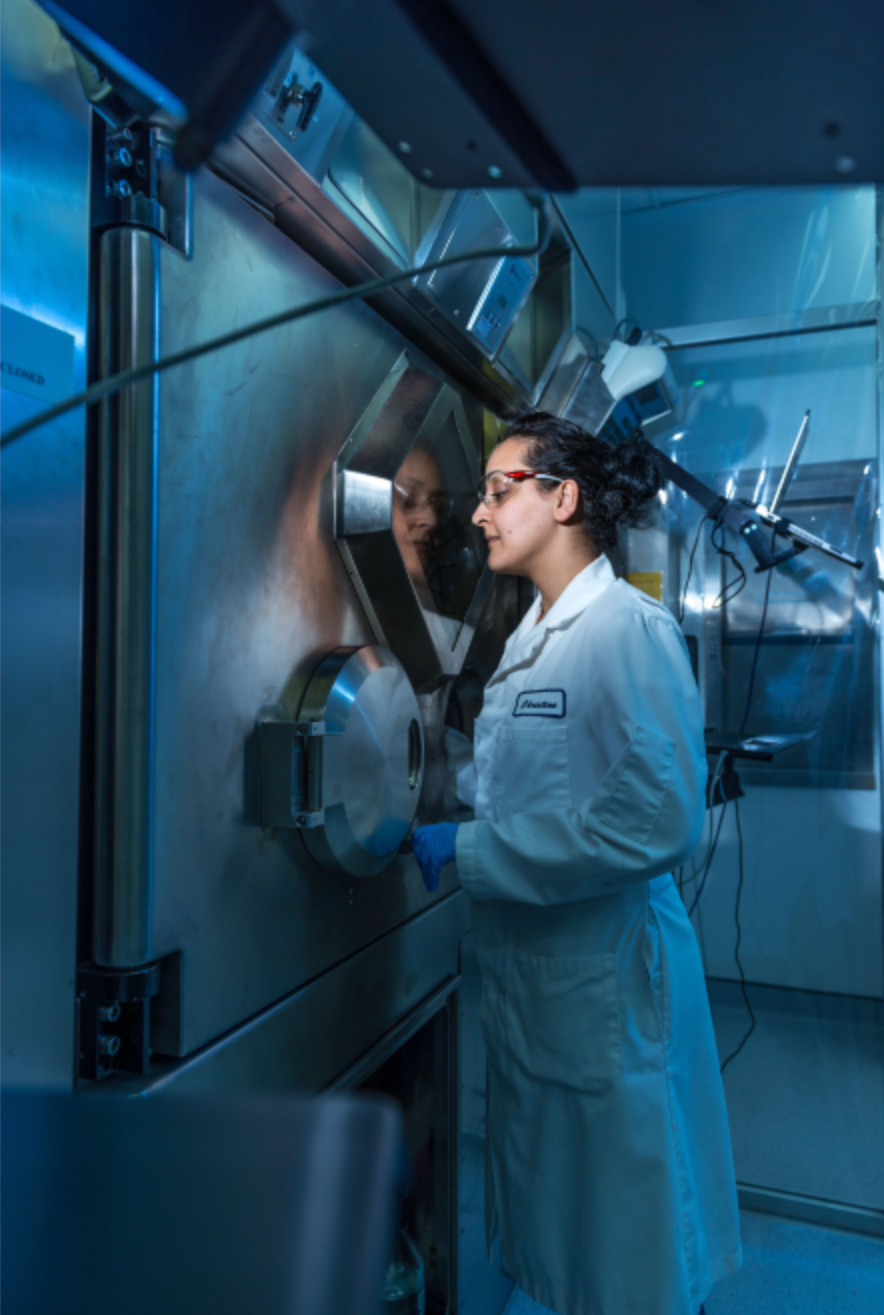
Lab 007
Diagnostic Radiopharmaceuticals
The Radiopharmaceutical Production Group at TRIUMF focuses on the production and development of radiopharmaceuticals used in brain research and other programs at UBC and BC Cancer (BCC).
The radiopharmaceuticals produced by the Radiopharmaceutical Production Group are prepared following Good Manufacturing Practices (GMP) guidelines. Operating following these guidelines ensures that the radiopharmaceuticals are consistently produced in a controlled manner and that they meet quality standards for their intended use in humans. The radiopharmaceuticals are processed inside of hot cells to shield the radioactivity, and inside of clean rooms to ensure the GMP integrity of the drugs. The radiopharmaceutical production and quality control work is carried out following the requirements of TRIUMF Life Sciences’ Quality Management Systems, TRIUMF’s Canadian Nuclear Safety Commission license conditions, and Health Canada’s GMP guidelines.
The majority of the radiotracers produced by the Radiopharmaceutical Production Group at TRIUMF are used for the PET-MRI Imaging Center, a joint UBC/TRIUMF PET imaging program dedicated primarily to imaging research on Parkinson’s disease. The research areas at the PET-MRI Imaging Center also include Alzheimer’s disease, brain injury and healthy ageing, dementia, multiple sclerosis, mood disorders and addiction with a strong emphasis on synergies.

GMP Lab

TR-13 Cyclotron

Radiopharmaceutical Production Group

Brain metabolism using the radiotracer 18F-FDG
Therapeutic Radiopharmaceuticals
The radionuclides we produce and the novel chemistry we discover enable us to develop next generation therapeutic radiopharmaceuticals with alpha-emitters or Auger electron emitters based on small molecules, peptides, and antibodies. We work with partners at BC Cancer Research Institute, BC Children's Hospital, University of Toronto, University of British Columbia, and Simon Fraser University to perform radiolabeling, cell biology evaluation, and preclinical imaging, biodistribution, and therapy efficacy studies, with the ultimate goal to benefit cancer patients.

Hot Cell Lab
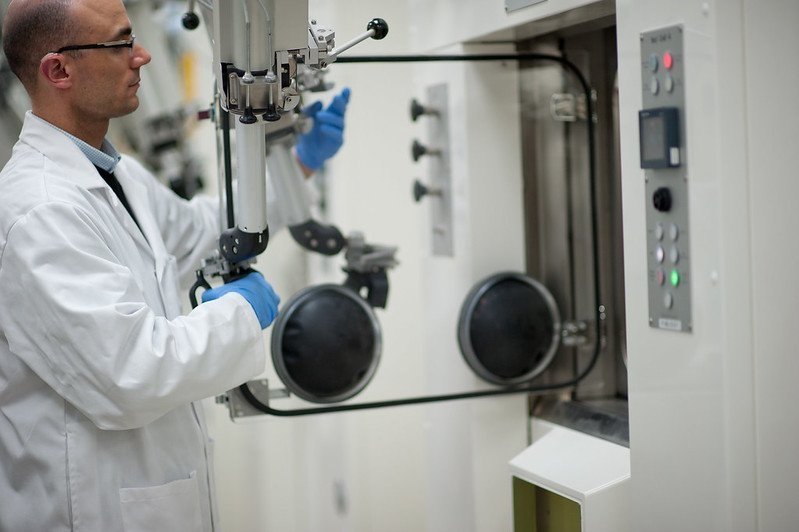
Hot Cell Lab
New Radiochemistry
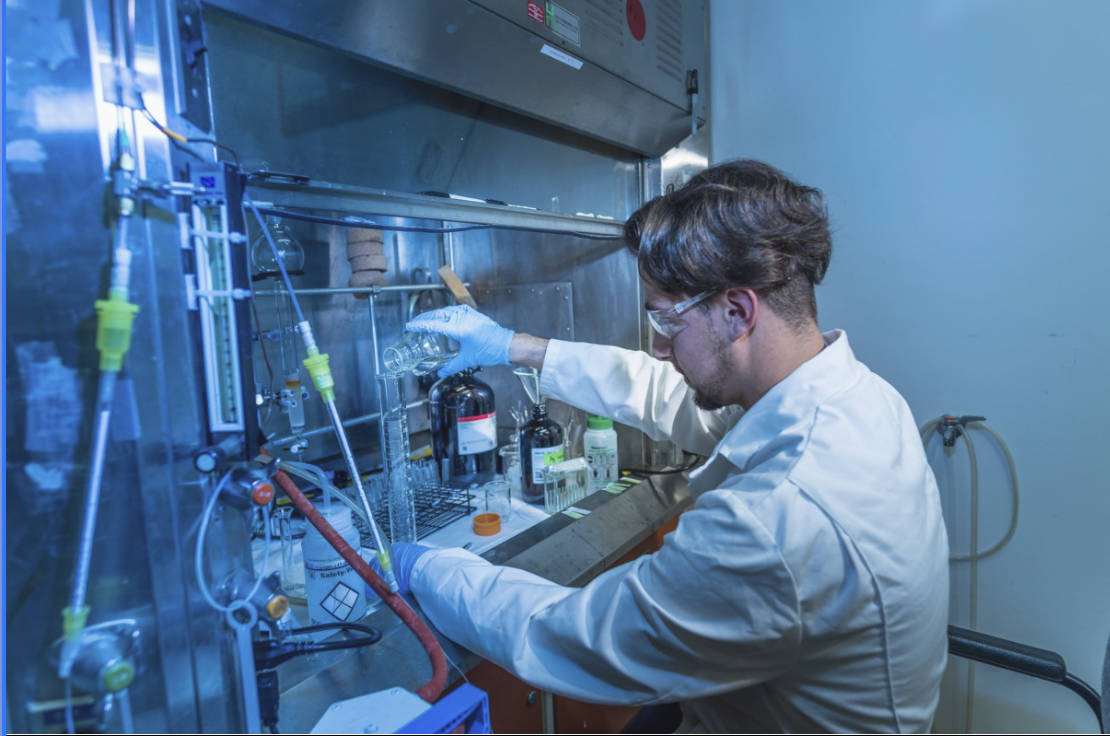
Unconventional radiometals such as Hg-197, Pb-212, Ac-225, and Th-227, all require chelators that can efficiently complex those radionuclides to disease targeting vectors, allowing the stable and safe delivery of the radioactive payload in vivo. These chelators are critical components of the radiopharmaceutical that must be optimized for each radiometal for maximum efficiency and stability.
We have a strong research program in new chelator development for emerging radiometals. We want to understand the fundamental coordination chemistry and design new chelators and new chelation strategies that will enable the use of the exotic and emerging metal ions in clinical settings.
We also host a list of projects that aim to develop new radiochemistry to label different biomolecules, or new devices that can be used in radiopharmaceutical synthesis.

External Beam Radiotherapy
50% of cancer patients in BC receive radiotherapy, either alone or in combination with surgery and/or chemotherapy. But radiotherapy, while a powerful tool to kill cancer, also has many side effects and is therefore not available to all patients or can lead to subsequent reoccurrence or secondary cancer, putting a significant strain onto the health care system. The aim for most research into radiotherapy is to increase the therapeutic index of the treatment, allowing to effectively kill the cancer cells while keeping the side effects as low as possible to avoid complications. This can be done via better control of the treatment delivery, by having better detection methods to determine the dosimetry of the treatment, or by exploring novel treatment beam options. At TRIUMF we explore radiation with protons and photons in conventional dose rates and FLASH, as well as with neutrons.

Proton Irradiation
Student and Post Doc Opportunities
We are training the next generation of researchers, educators, and innovators. Click the links below to learn more about opportunities for Undergraduate and Graduate students and Postdocs at TRIUMF.
